
How to Optimize Your Visibility in AI Search Engines and Answer Engines

Search Toolbox
SEO / GEO Editorial
Google already shows AI answers before organic links, and tools like ChatGPT or Perplexity quote pages directly. If your content is hard for those systems to parse, you can stay invisible there even with strong classic rankings. The upside is simple: the habits that improve GEO also make your SEO cleaner. Nice when the work is not duplicated for once.
What AI search engines actually look at
LLMs do not read the web like Googlebot. They rely more heavily on snapshots, well-structured blocks, explicit entities, and opening paragraphs that get to the point quickly.
In practice, messy pages rarely get cited even when the underlying information is good. Cleaner pages do better because they are easier to parse and reuse. Search Toolbox helps you inspect that readability on the live page, not on an abstract or cached version of it and not in a polished narrative that falls apart on inspection.
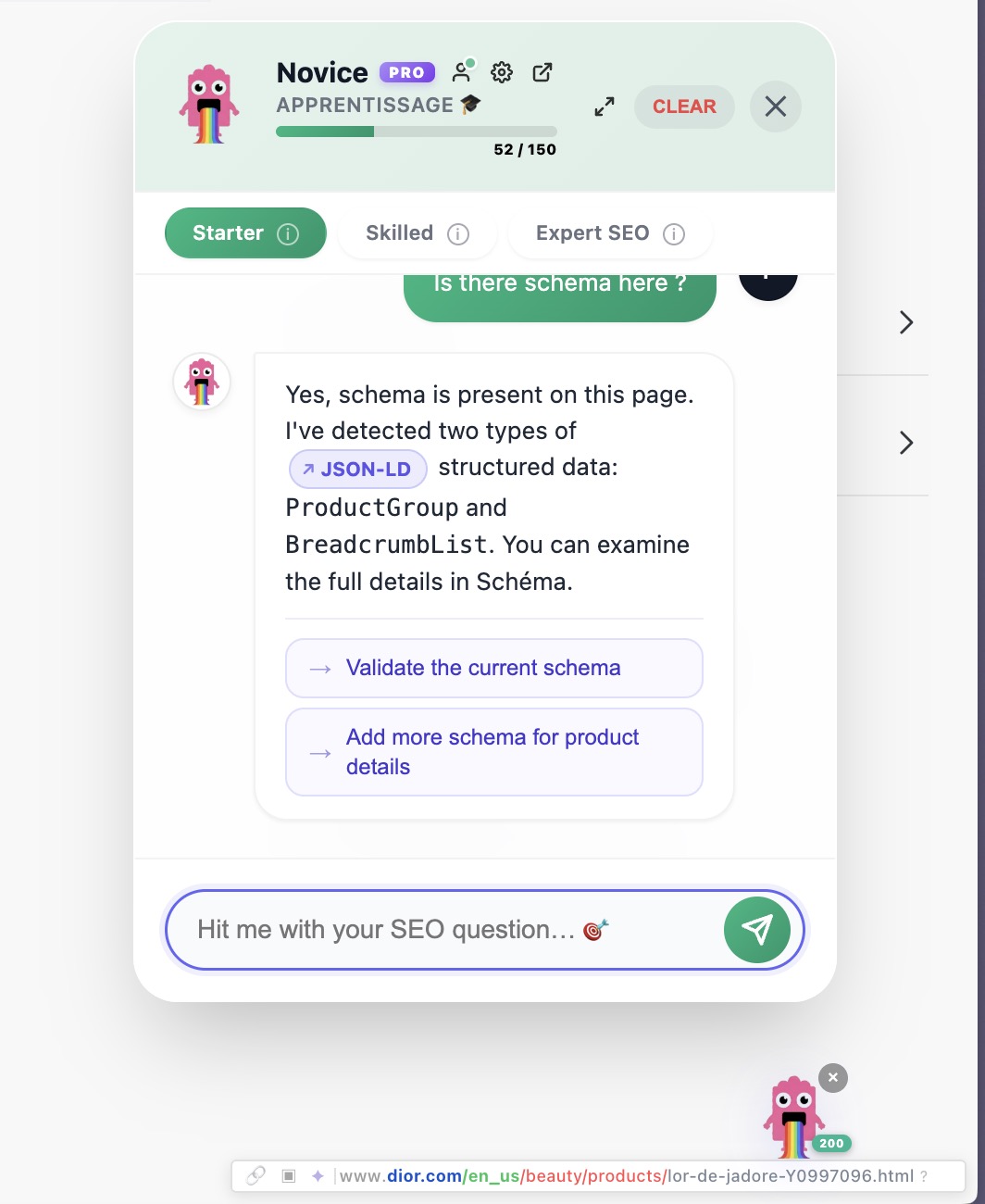
AI crawlers: allow, block, or guide?
Several providers document separate user agents, including GPTBot, PerplexityBot, and ClaudeBot. Google-Extended is different: it is a robots.txt control token, not a standalone crawler.
So this is not just a technical toggle. It is also a visibility and content-control decision. An access rule may affect certain uses, but allowing a bot guarantees neither training, citation, nor visibility. Search Toolbox helps you inspect the directives that are actually declared without treating robots.txt like a crystal ball.
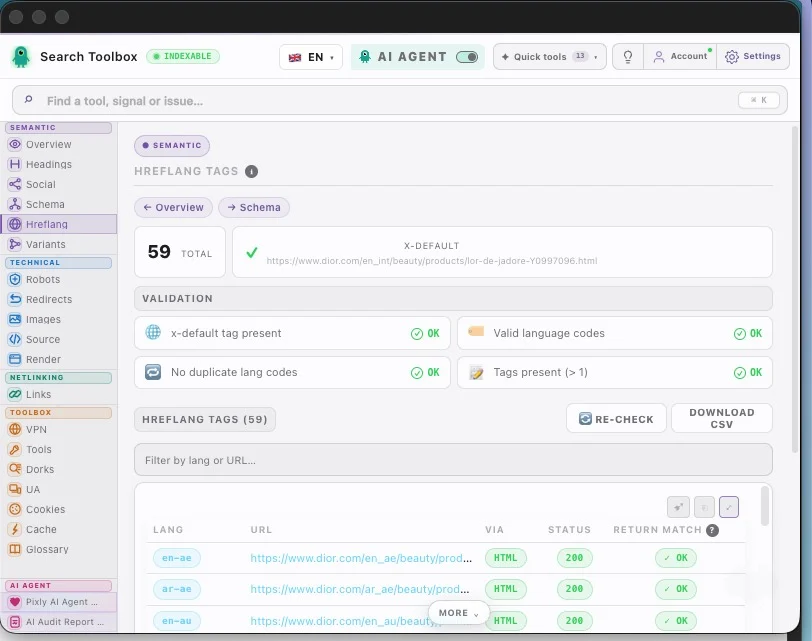
Structuring content for answer engines
Answer engines like direct language. If the opening paragraph is vague or too promotional, it is easier to skip than to quote.
A simpler pattern usually works better: use an H2 that frames the question, answer it directly in the first paragraph, then expand with a short list or a few tight sub-points. It is not glamorous, but readable usually beats ornamental. Search Toolbox helps you check whether the page follows that logic and whether the supporting schema stays aligned with it.
- Good pattern 1: an H2 that frames a real user question.
- Good pattern 2: a first paragraph that answers directly without detouring.
- Good pattern 3: a few structured points, not a wall of text.
- Good pattern 4: schema that matches what the content is actually doing.
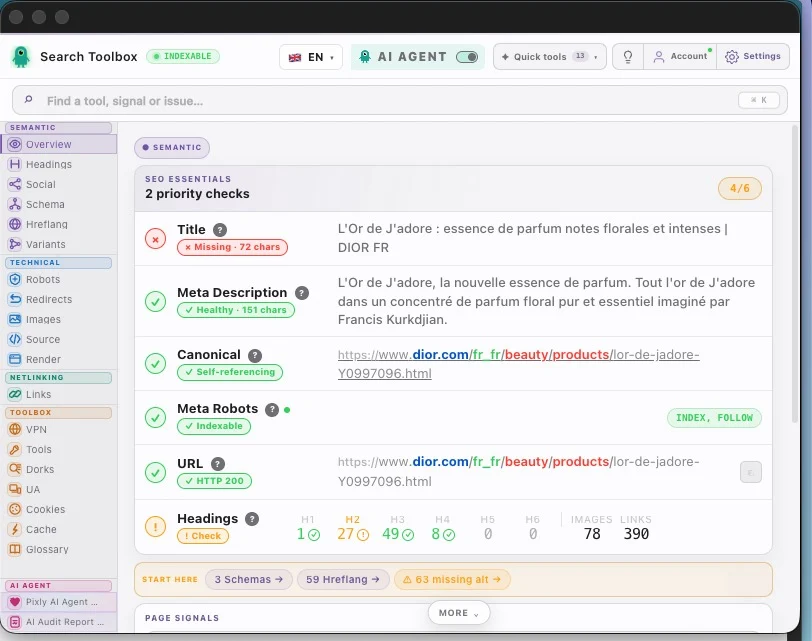
Search Toolbox · live panels
GEO signals on the real live page
GEO does not live inside one score: it sits between content, entities, schema, crawler access and technical consistency.

Swipe · tap to zoom

Audit your GEO signals right now
60+ free SEO & GEO tools. No credit card.
Install Search Toolbox — FreeStay in the loop
New SEO & GEO guides straight to your inbox
No spam. Just the guides that matter.
Learn SEO / GEO the practical way
Audit a page, tab by tab.
A guided route from first observation to verification. Open the lesson to learn the method, or jump to its tool and inspect the active page.
- Step 01
Open the page and establish the baseline
Start on the live URL and record the final URL, HTTP response and indexability.
- Step 02
Check Overview, metadata and canonical
Resolve noindex, title, description, robots and canonical conflicts first.
- Step 03
Audit headings, links and images
Read the hierarchy, follow internal anchors and fix repeated image-template errors.
- Step 04
Validate schema and entity relationships
Inspect the rendered JSON-LD graph, required properties and conflicting entities.
- Step 05
Verify hreflang and localized URLs
Test reciprocity, language codes, canonicals and HTTP status across the cluster.
- Step 06
Trace redirects and URL variants
Follow every hop and confirm the final URL is indexable and self-canonical.
- Step 07
Understand SSR, CSR and the rendering risk
Learn what the server sends, what JavaScript adds and which differences deserve investigation.
- Step 08
Investigate source HTML and rendered DOM if needed
Use this deeper check only when simpler panels reveal a JavaScript-related contradiction.
- Step 09
Prioritize, export, fix and retest
Turn evidence into an ordered plan, change one thing, then rerun the same checks.
Apply it to your site
Guide read. Now choose the real use case.
These workflows apply the method to real CMS failure modes and show which page and Search Toolbox panel to inspect next.
Free SEO Audit Tool with Actionable PDF Reports
A green overall score can hide contradictory canonicals, blocked resources or broken structured data.
Open workflowHow to Validate JSON-LD Added by JavaScript
Client rendering can add the right block twice, remove it on navigation or leave stale product values.
Open workflowUsing another CMS or looking for one specific check?
The directory brings every use case, free tool and troubleshooting guide together.
FAQ and related searches
Frequently asked questions
What is GEO in SEO?
Generative Engine Optimization improves how clearly AI search systems can access, understand and cite a source. It combines answer-focused content, identifiable entities, trustworthy evidence, structured data and technically accessible pages.
How do you optimize content for ChatGPT, Gemini and AI Overviews?
Answer the main question directly, structure supporting details clearly, cite reliable sources, make authorship and entities explicit, and keep canonicals, robots directives, schema and localized versions consistent.
Does Schema markup guarantee visibility in AI search?
No. Structured data clarifies entities and relationships but does not guarantee inclusion or citations. It supports strong content and technical accessibility; it cannot replace them.